
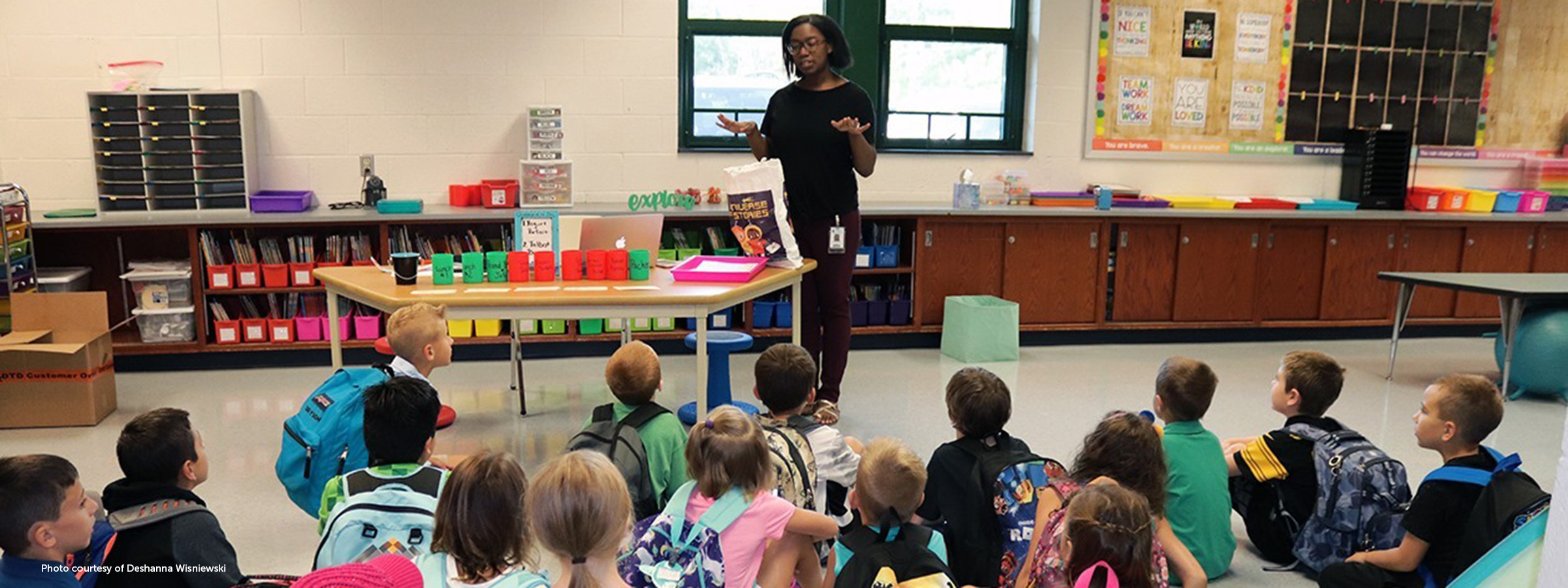
The education system makes changes daily on what they think is best for kids. There are constant charges for innovation and technology. The push to be the best and have the biggest impact on children’s lives. The highest test scores reflect the best teachers. The buzz words, the programs, the curriculum, the test scores are supposed to make our children better equipped for the world. These concepts don’t equip all children.
The people creating these initiatives have a specific type of child in mind. Typically, this child is not part of any marginalized group. These initiatives leave holes in our school system. The holes need to be plastered, yet they are patched with non-meaningful resources.
As teachers of color, we see these holes. We see that patchwork. We see the injustices in the districts. We see the bias. We see how the patches just check the boxes. The resources we are expected to use don’t meet the needs of teachers or students of color because they are not created by individuals who look like us. They watch a movie and believe they can “save us.”
A great deal of resources for Brown and Black teachers and students are often rooted in white saviorism—the idea that white people can change us into versions of them. We saw this when the colonists came to the Americas wanting to change the ways of the Indigenous people.
Another reason these resources don’t meet the needs of students of color is that the teachers in charge don’t understand why resources need to be created with students of color in mind. There is sympathy for the situation, but there is no empathy. I’ve heard too many teachers assume certain children “won’t grow up to be anything.” These mindsets dictate how schools look at and address every child, family, or teacher of color.
Finally, the resources are not ongoing, so sustaining progress is impossible. One multicultural event for Black History Month will not drive out the hate and systemic racism against people of color. (One of my ongoing tips and challenges is to ensure I talk about great Black and Brown individuals outside of Black History Month!)
Teachers of color know something must be done. Now, teachers of color are coming together to collaborate and share ideas. As teachers of color, we know the hardships and the blessings of our school experiences. We have not experienced the same blessings or obstacles, and we know that resources are not one-size-fits-all.
As teachers of color, some of us stand alone. Or, there may be one or two teachers of color in a predominantly white staff. We need to connect. We need to innovate. We need to take action to create ongoing resources for all children. Maya Angelou said, “When you know better, do you better.” We need to want to know better. We need to want to do better.
Here are a few resource hubs that center the experiences of teachers and students of color:
- The Tutu Teacher: Vera Ahiyya, a kindergarten teacher in Brooklyn, New York, uses her blog to share best practices and classroom activities with other teachers. She has a deep passion for teaching and comes from a long line of educators. Be sure to visit her pages on Pinterest, Twitter, Instagram, Facebook, and YouTube for great ideas, free downloads, and tips, including diverse book recommendations and ratings.
- Read Like a Rock Star: Read Like a Rock Star began as a profile on Teachers Pay Teachers. Now, founder Naomi O’Brien, an educator and advocate with more than 10 years of experience, creates and curates affordable resources on her website. She prides herself on the way she builds relationships with kids and their parents/guardians, being culturally responsive, having high expectations for all of her students, and being a learner always. Some popular resources include “Your Name is a Big Deal” (developed in collaboration with LaNesha Tabb), “Critical Conversations to Have With Kids,” and “Talk About It: Real World Issues.”
- Education with An Apron: LaNesha Tabb is the founder of Education with An Apron, where she encourages teachers to” break out of the same lessons and ideas that have been taught for decades” by implementing globally and culturally relevant ideas into every lesson. In addition to creating educational resources for teachers to use in classrooms, she also provides professional development and online workshops for educators. Get started with “Hearts at Ease, Minds at Peace: A Mental Health Check-in For School” and “Raising Rigor: Self-Guided Inquiry.”
To learn how schools can better support teachers of color, visit our Research Map topic page summarizing the latest research on recruiting and retaining teachers of color, written in collaboration with educator, instructional coach, and Teachers of Color Advisory Council member Monique Belin.
- Topics: AI and Emerging Tech , Classroom Practice , Core Content , Evidence-Based EdTech , Pathways and Economic Mobility , Systems and Leadership , The Whole Learner
- Audiences: Researchers
- Programs: Adult Learning , Center for Inclusive Innovation , League of Innovative Schools , Learner Variability Project , Learning Sciences Research , Micro-credentials , Product Certifications , Reinvent the Classroom