
How Students Use AI and Coding to Tackle Waste Management
Key Ideas
- Integrating artificial intelligence (AI) and coding into education empowers students to design socially beneficial solutions, fostering both technical and ethical growth.
- Student-led, project-based learning encourages ownership and creativity, enabling young people to address pressing issues like the climate crisis through innovative technologies.
- Schools play a critical role as incubators of sustainability-driven innovation, where students can explore real-world challenges and develop practical, future-ready skills.
The use of artificial intelligence technologies in education has the potential to enhance student learning and enable them to contribute to reducing social inequalities. In our experience, AI-powered solutions have helped raise students’ awareness on environmental, economic, and social sustainability issues, while enabling them to develop innovative projects in areas such as energy efficiency, waste management, and resource conservation. Technology became not only a tool for producing knowledge but also a means to build a more livable world. At the heart of this transformation are schools—not just places where information is delivered, but as hubs of societal change and digital awareness.
As a teacher at Atatürk Mesleki ve Teknik Anadolu Lisesi School in Ankara, Türkiye, I established a coding club at my school to encourage students to develop solutions to real-world problems. The club aims to help students apply theoretical knowledge gained in classes to address challenges they observe in their surroundings. Any interested student can join the workshops held during club hours. For the past three years, students aged 15-16 have also been taking an elective course on Artificial Intelligence and Machine Learning, through which they work on hands-on projects. Our guiding principle is clear: to use AI for social good.
During one of our brainstorming sessions, I asked students to list problems they noticed at school. Most of them identified improper recycling practices—especially waste being randomly discarded in bins—as a major issue to address.
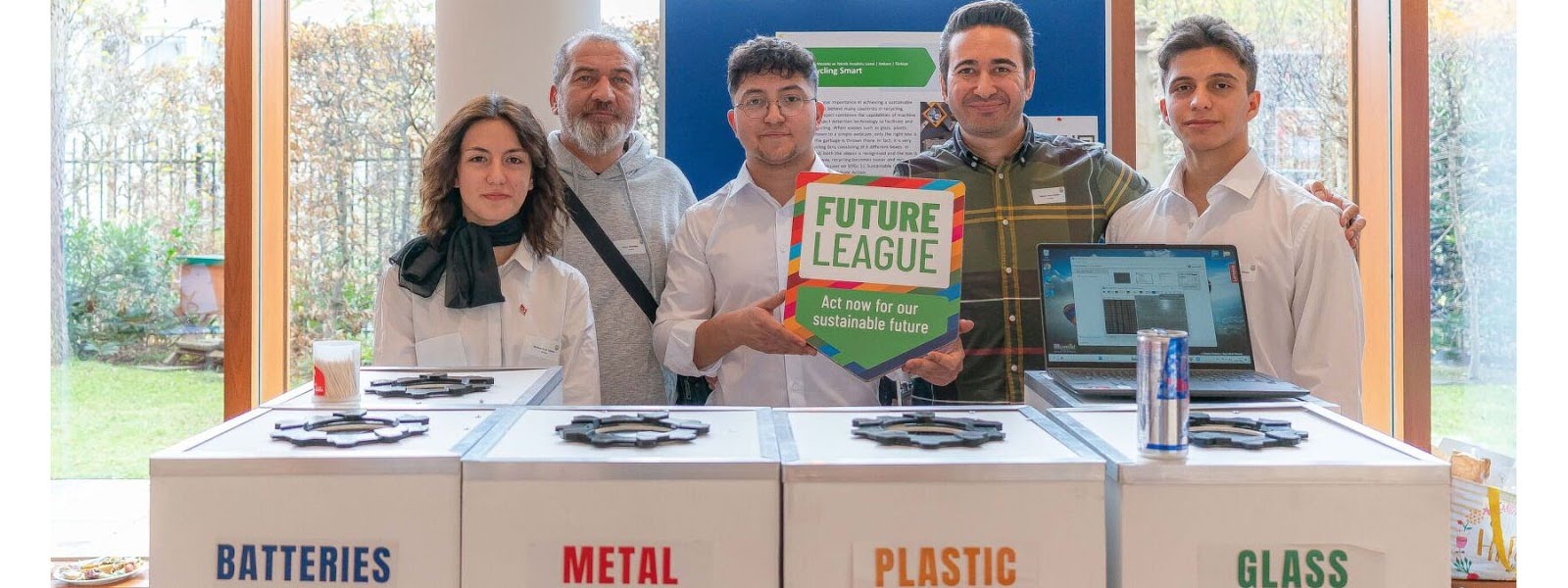
The students quickly applied what they learned in AI and machine learning. They installed a basic webcam above a waste bin, trained it with object recognition, and added a motorized mechanism that only opened the correct bin when a specific item was detected.
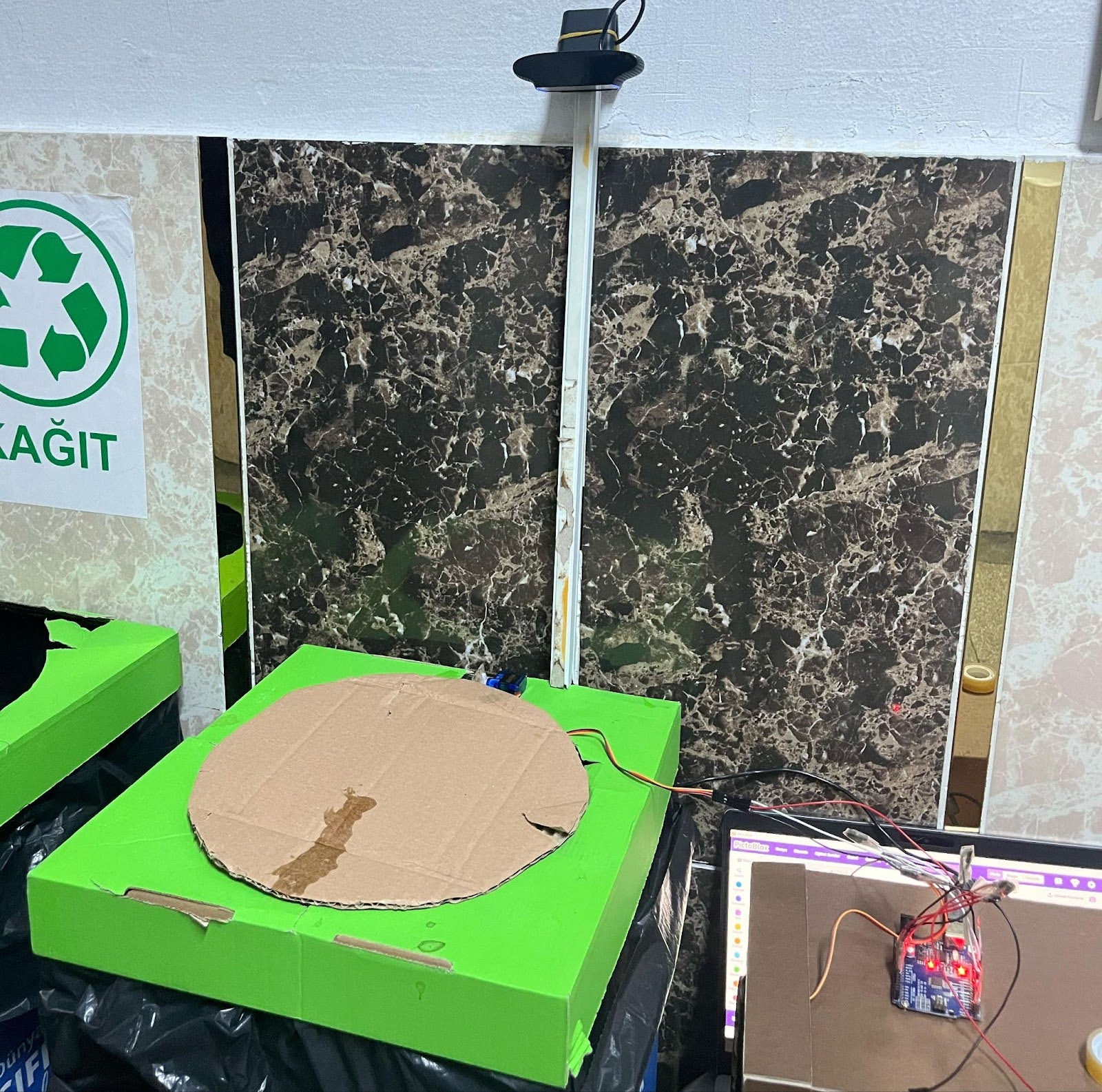
This helped mitigate students placing trash in the wrong container. During the initial trials, they observed that their peers found the system both engaging and educational. The system’s accuracy exceeded 95%, which was impressive for a prototype.
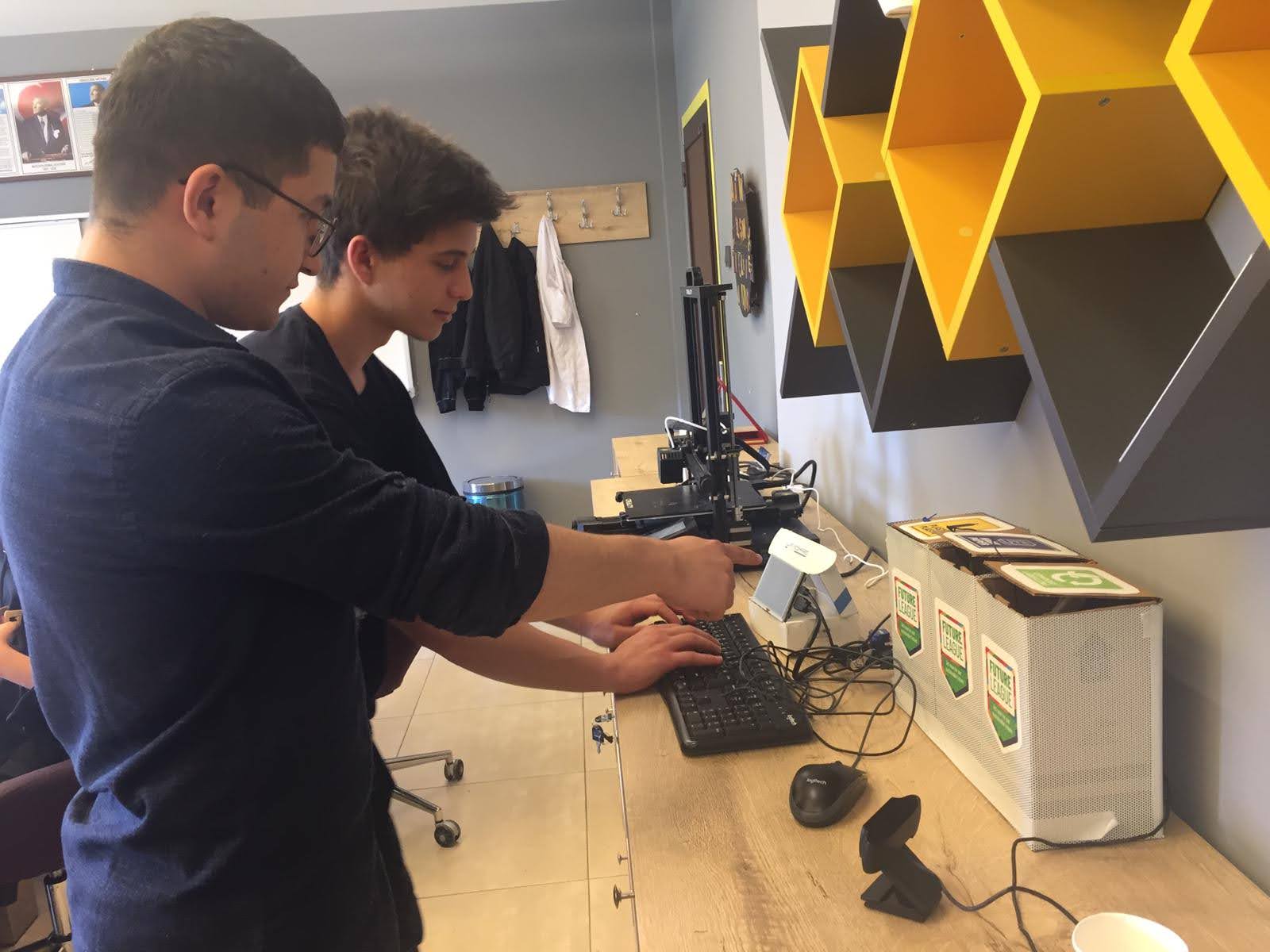
[soundcite url=”http://digiprom.tealmedia.dev/wp-content/uploads/2025/09/audio-caption-2.mp3″ start=”0″ end=”26000″ plays=”1″ text=”Listen”] to their teacher describe the image above.
“This project was more than just a technology experience—it was a journey of awareness. I realized that when we solve a problem using AI, we’re actually making a small but meaningful contribution to society. Now, I don’t just think about building technology, but about how to use it to create a positive impact for people and the planet.” – Melissa, Student
Solving real-world problems using the power of AI
Creating a product that benefited their immediate environment had given students a strong sense of purpose. It boosted their confidence and improved soft skills such as responsibility, teamwork, and problem-solving. At the same time, they developed hard skills in fields like AI, robotics, and programming—skills that can shape their future careers. The transformative impact of such projects on students is extraordinary, and as a teacher, witnessing this change is truly priceless.
“I never imagined that a project we started at school would gain such recognition. Looking back now, I’m incredibly proud that we showed how an idea can transcend boundaries.” – Cafer, Student
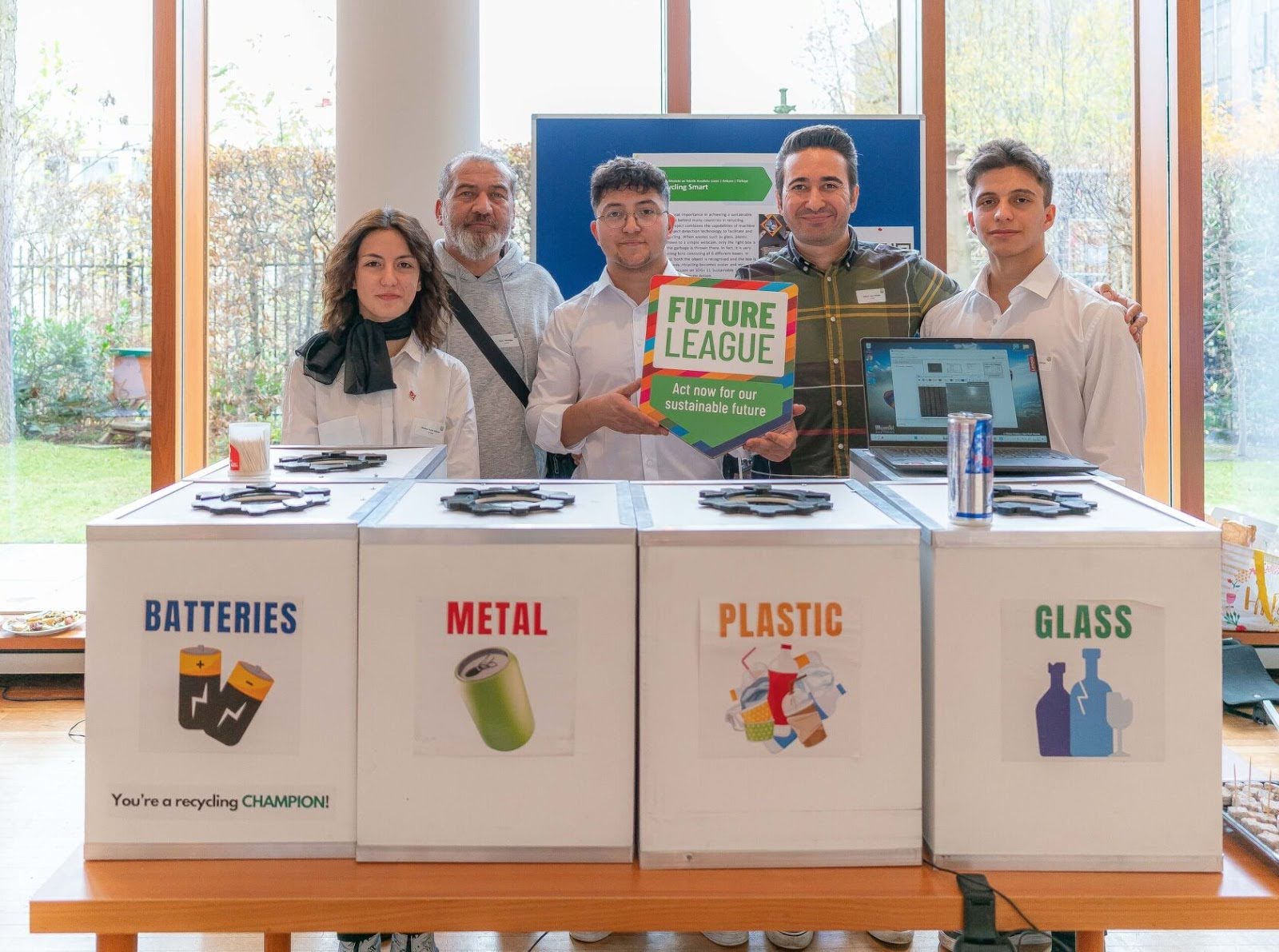
With their project Recycling Smart, students gained international recognition—an achievement that meant a great deal to them. However, one story stands out most to me. One of the team members, Berat, had long struggled with choosing a university major. Through this project, he discovered his passion for AI and machine learning and realized that a career in this field was right for him. Today, he is a freshman at university, taking further steps toward solving real-world problems using the power of AI.
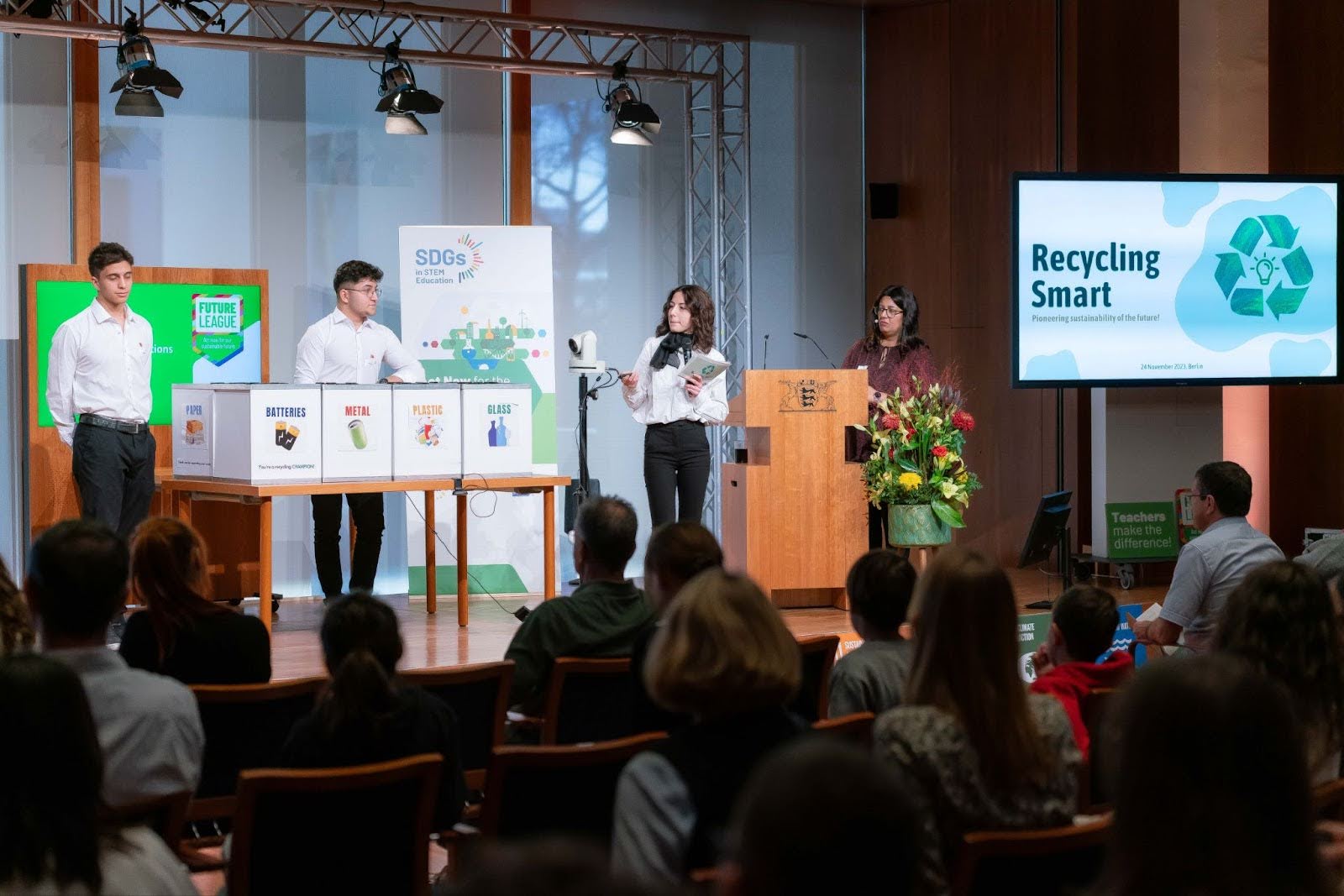
[soundcite url=”http://digiprom.tealmedia.dev/wp-content/uploads/2025/09/audio-caption.mp3″ start=”0″ end=”36000″ plays=”1″ text=”Listen”] to their teacher recall the moment captured in the image above.
Although Recycling Smart started with a simple idea, it yielded powerful results—enriching both our school environment and our students’ personal development. This clearly demonstrates the vital role of education in contributing to sustainability. And at the heart of it all stand the schools, leading the way in this technological and social transformation.
Support Student Creativity and Innovation in Your Community
- Register for the Ciena Solutions Challenge: Educators can register now for the Ciena Solutions Challenge. Through March 5, 2026, educators can submit student projects and apply for a $3,000 Sustainability Award.
- Explore the Ciena Solutions Challenge Project Gallery and previous awardees from 2023, 2024, and 2025 for inspiration.
- Have questions? Email us at cienachallenge@digitalpromise.org.
- Programs: Global Education , Powerful Learning