
Working in the education sector, I sometimes wonder how I made it through the education system, considering the odds. I have to look no farther than my ancestors, grandparents, and parents for the answer. My dad and his 11 siblings were raised in a three-room house with no running water in rural Ohio. Despite the incredible odds, all 12 graduated high school. That is true education innovation.
Every day people, like my parents and grandparents, in communities across the country are “making a way out of no way” by tapping into their innate fortitude and ingenuity. Communities by definition are brilliant, entrepreneurial and creative. We must listen to and honor the perspectives of the communities who have been most impacted by barriers in education systems.
Instead of “helping people” by creating solutions that do not fit, the question is: How do we effectively resource communities as leaders and collaborators with schools to create education innovations?
Over the past three years, in leading our school and community networks in parallel to advancing our commitment to learning excellence for all.
At Digital Promise, we have been listening, learning, researching, and designing a model of Inclusive Innovation to recognize the talent of underserved communities as leaders, designers, and beneficiaries, working in collaboration with school districts, to redefine education innovation.
Today we are announcing the launch of The Center for Inclusive Innovation, focused on:
Resourcing the creative ingenuity of communities to co-create education innovations designed to enable self-determination for students.
The Center for Inclusive Innovation builds on the foundation of our work with the League of Innovative Schools and Education Innovation Clusters community networks. The work of the Center will spur the creation of Inclusive Innovation incubators across the country—essentially spaces for fostering and deepening collaborations between communities and districts from the League and beyond. The League represents the full spectrum of neighborhoods, teaching and learning contexts, and student populations in the country and will anchor the national footprint for this work. Out of this endeavor will emerge new and differentiated models, tools, programs, and products that are created by and supportive of the needs, interests, and dreams of students and families.
We are launching this endeavor with several research and development (R&D) projects underway, including:
- Addressing Adolescent Writing through Inclusive Innovation
We are working with teams of educators and community stakeholders in three regions on supporting adolescent writing for high school students. - A Diverse Educator Workforce: Designed by Teachers of Color
Teachers of color from seven regions across the country are designing concepts to increase recruitment and retention. In December, we are hosting a national convening to showcase the concepts and organizations who are leading the work. - Open Education Resources for Community-Based Socratic Circles
We will work in collaboration with communities and districts to develop resources and teacher professional development to build teacher capacity and competency to engage students and communities in healthy, productive Socratic Circles. - Inclusive Innovation Capacity Building
We will engage deeply with a district and its community partners to support and resource their capacity to apply Inclusive Innovation practices to address a local problem of practice. We’ll also document, codify, and share the learnings with the field through convenings, and communications campaigns.
The design and strategy of the Center is being informed by a renowned Community Advisory Council who work directly with and in-service of communities of color: 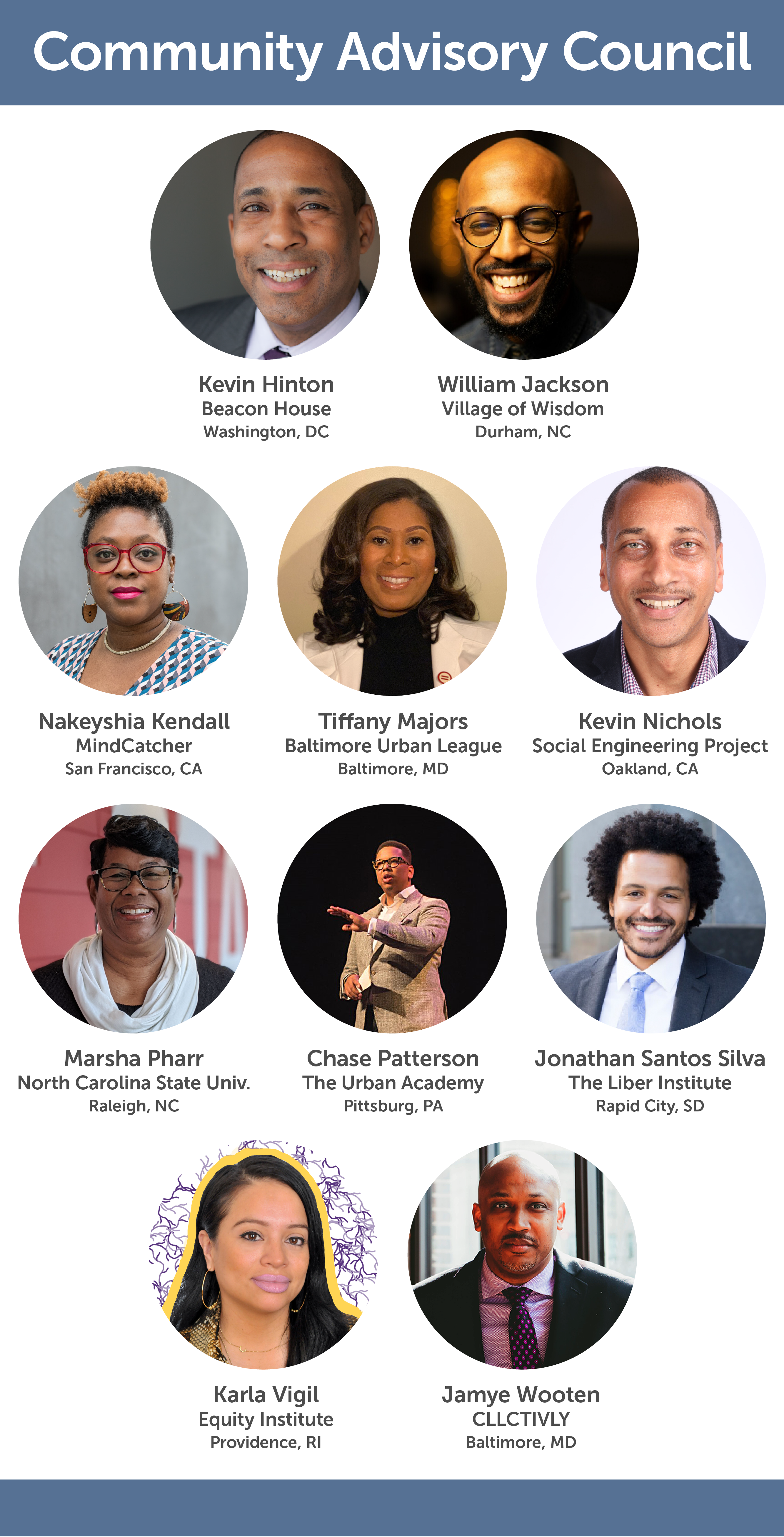
- Kevin Hinton, CEO/Executive Director, Beacon House (Washington, DC)
- William Jackson, Founder/CEO, Village of Wisdom (Durham, NC)
- Nakeyshia Kendall, CEO/Founder, MindCatcher (San Francisco, CA)
- Tiffany Majors, President and CEO, Greater Baltimore Urban League (Baltimore, MD)
- Kevin Nichols, Co-Founder/CEO, The Social Engineering Project (Oakland, CA)
- Chase Patterson, CEO, The Urban Academy of Greater Pittsburgh (Pittsburgh, PA)
- Marsha Boyd Pharr, Retired Assistant Vice Chancellor at North Carolina State University and TRIO Programs Director (Raleigh, NC)
- Jonathan Santos Silva, Founder/CEO, The Liber Institute (Rapid City, SD)
- Karla Vigil, Chief Executive Officer, Equity Institute (Providence, RI)
- Jamye Wooten, Founder, CLLCTIVLY (Baltimore, MD)
I am excited to launch the Center with my colleagues Malliron Hodge, Director of Community Collaboration and Design; Viki Young, Senior Director of Research; and the Digital Promise team.
Over the next several months, we will create a platform for community leaders, families, and schools to share how they are engaging in this work together. I am honored to build on the legacy of my parents by dedicating my life’s work to being an education freedom fighter and, hopefully, change the game and the odds.
Sign up below to stay in touch about opportunities to get involved with the Center for Inclusive Innovation.