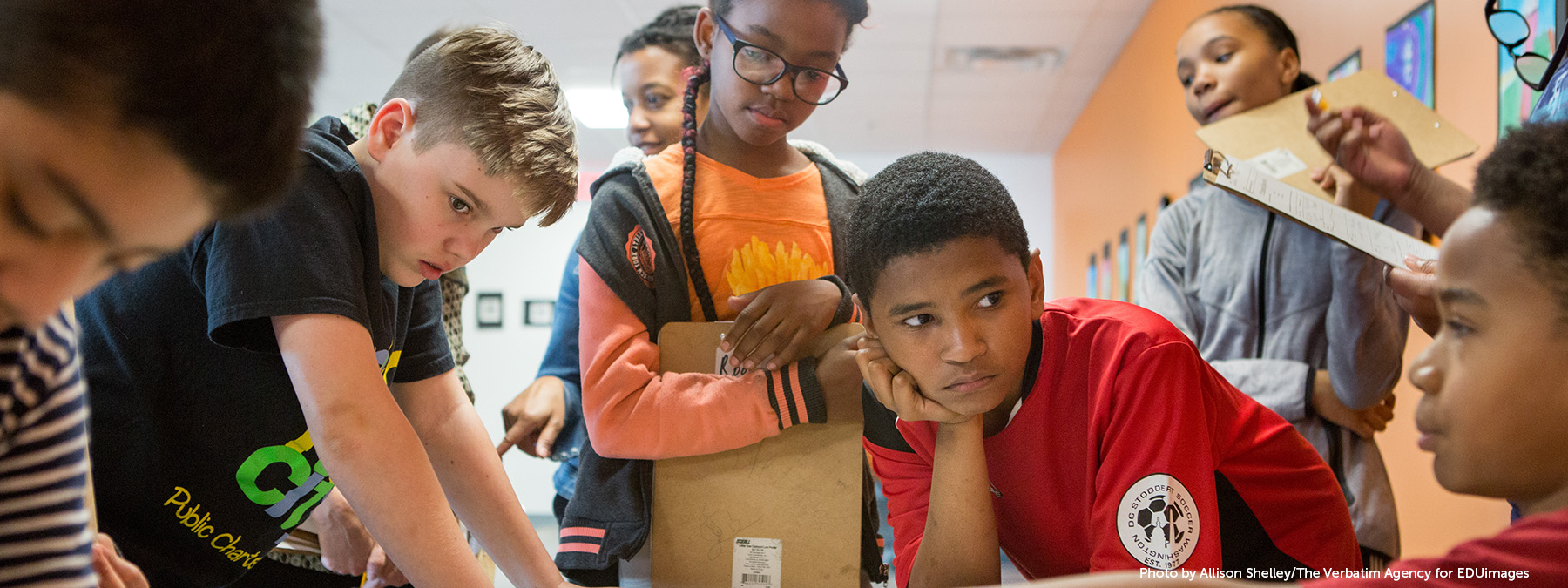

Learning Primers
Overview of key topics in collaborative learning research that translate relevant research concepts and findings on collaborative learning.
Part of Learning Sciences Research
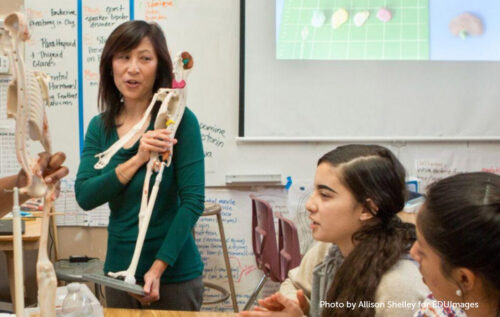
The MC² project was divided into three phases:
We created a comprehensive map of the research on collaborative learning, using bibliometric tools to identify key themes and trends in the field.
We brought together a panel of K-12 teachers and education researchers to review the literature map and determine which topics are most relevant and useful for classroom practice.
We co-developed resources based on those key topics. Groups of teachers and researchers worked together to design materials that translate research findings into practical strategies for use in real classrooms.
By working, discussing, and writing together, researchers and practitioners developed a better understanding of each other’s perspectives and how each thinks about collaborative learning.
We encourage educators to explore the primers and toolkit, reflect on the video examples, and let us know what you think.
We created three types of resources to help coaches and teachers incorporate collaborative learning in classrooms:
Overview of key topics in collaborative learning research that translate relevant research concepts and findings on collaborative learning.
A practical set of guidelines to help coaches and teachers implement research-based collaborative learning activities.
A series of videos that depict authentic examples of collaboration in practice.
Download our practitioner toolkit and learning primers.
During the first two phases of the MC² project, we conducted rigorous research to lay the foundation for the development of research-based teacher materials.
We employed innovative bibliometric literature synthesis techniques to survey thousands of research articles and identify key themes in collaborative learning research literature (Phase I). We then conducted a Delphi method panel bringing together expert practitioners and researchers to determine the topics most relevant for K-12 classroom practice (Phase II). Throughout the research process, we kept in mind our aim to engage in the bi-directional knowledge translation, which honors the expertise of both teachers and researchers (Phase III).
In the final year of the project, we synthesized the knowledge gained about the bi-directional process of knowledge translation and developed a framework to support individuals and organizations engaged in similar work, with the goal of facilitating teachers’ implementation of evidence-based practice.
We authored the following research papers, which may interest researchers and practitioners involved in knowledge translation.
Dragnić-Cindrić, D., Fusco, J., (2025). Key CSCL research topics for K-12 practice: A modified Delphi study with practitioners and researchers. Computers & Education Open. https://doi.org/10.1016/j.caeo.2025.100265
Dragnić-Cindrić, D. & Fusco, J. (2024). Converging on Key Topics for Collaborative Learning in K12 Practice Using the Delphi Method. In Lindgren, R., Asino, T. I., Kyza, E. A., Looi, C. K., Keifert, D. T., & Suárez, E. (Eds.), Proceedings of the 18th International Conference of the Learning Sciences – ICLS 2024 (pp. 2329-2330). International Society of the Learning Sciences.
Dragnić-Cindrić, D., Fusco, J. (2023). Re-envisioning bibliometric analysis as a tool for transforming the field., in: Blikstein, P., Van Aalst, J., Kizito, R., Brennan, K., (Eds.), Proceeding of the 17th International Conference of the Learning Sciences – ICLS 20023 (pp. 1831 -1832). International Society of the Learning Sciences. https://doi.org/10.22318/icls2023.125077
Dragnić-Cindrić, D. & Fusco, J. (2025). LINC: Knowledge Mobilization Framework for Knowledge Brokers. In Rajala, A., Cortez, A., Hofmann, R., Jornet, A., Lotz-Sisitka, H., & Markauskaite, L. (Eds.), Proceedings of the 19th International Conference of the Learning Sciences – ICLS 2025 (pp. 2759-2761). International Society of the Learning Sciences. https://doi.org/10.22318/icls2025.120465

Coach and Teacher, Cedars International Next Generation High School

Teacher, Reedy Creek Magnet Middle School
Coach, Lake Marion Middle School

Coach and Teacher, McNicol Middle School

Principal, Mountain View High School

Computer Science Teacher, Middle School, Hackley School

Coach, Greenbrier County Schools

Personalized Learning Lab Teacher, The Net Charter High School

Teacher, Hot Springs County High School

5th Grade Teacher, Oak Park Elementary School



Senior Research Scientist



Researcher

Consultant

Consultant

This material is based upon work supported by the National Science Foundation under grant 2101341. Any opinions, findings, and conclusions or recommendations expressed in this material are those of the author(s) and do not necessarily reflect the views of the National Science Foundation.