Mapping, Clarifying, and Communicating Key Ideas about Collaborative Learning (MC²) Instructional Videos
Part of Mapping, Clarifying, and Communicating Key Ideas about Collaborative Learning (MC²) Resources
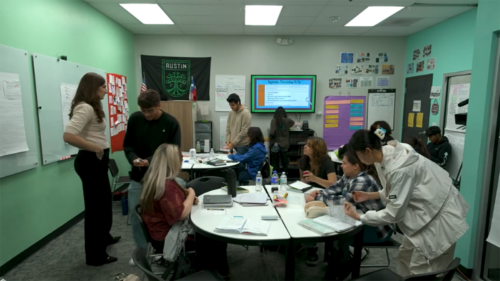
Collaboration Learning in Action is a series of videos showcasing many of the collaborative learning concepts from the Mapping, Clarifying, and Communicating Key Ideas about Collaborative Learning (MC²) primers in real classroom settings.
Audiences
Related Programs
Learning Sciences Research, Mapping, Clarifying, and Communicating Key Ideas about Collaborative Learning (MC²)
Learning Environments
Instructional Videos: Collaborative Learning in Action
While our text resources offer a wealth of collaborative learning strategies, we recognize that reading about a strategy is just the beginning. To truly implement these strategies effectively, educators need detailed guidance, real-world examples, and actionable tools.
Collaboration Learning in Action is a series of videos showcasing many of the collaborative learning concepts from the primers in real classroom settings. These videos provide authentic examples of collaboration in action across different grade levels and subject areas.
Our video collection highlights two dynamic learning environments:
- Middle School English Language Arts Classroom: See how collaborative strategies can be used to engage young students in meaningful discussion of texts.
- AP Calculus Classroom: Observe how complex mathematical concepts come alive through student-to-student collaboration and problem-solving.
These videos serve as powerful companions to our collaborative learning frameworks. Each recording demonstrates key characteristics of effective collaboration, including:
- Active student participation and voice
- Authentic assessment of collaborative work
- Collaborative problem-solving approaches
- Structured peer interaction
- Student thoughts about collaborative learning
- The teacher’s role in collaborative environments
We are especially grateful to the two schools for opening their classrooms to allow us to come in with a video crew and capture what collaboration is like in a real classroom. Students spent three to four months gaining collaborative learning skills in these classrooms. What the videos don’t show is all the prep work that helped the students work in this way. The educators say it takes effort, but it is worth it.
Teacher's Roles in Supporting Collaborative Learning
Classroom Discourse
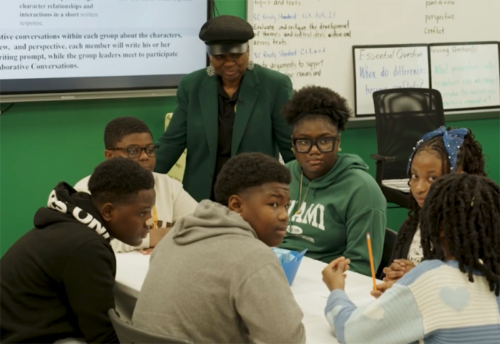
Students Build on Each Other's Thoughts or Ideas
Students attempt to summarize the thoughts and perspectives of multiple members of the group into one theme. A third student jumps into the conversation and makes some clarifying statements.
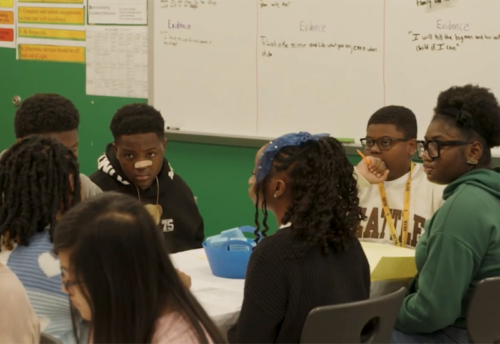
How Students Handle Disagreement
One student makes a comment and another respectfully challenges the perspective of the first.
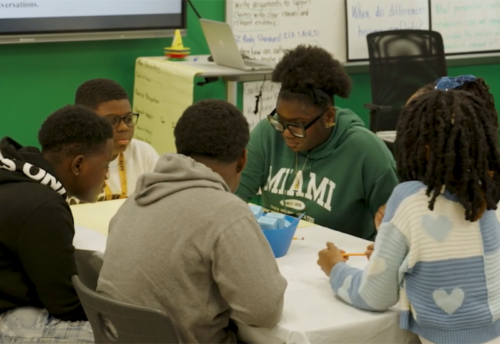
Assessment
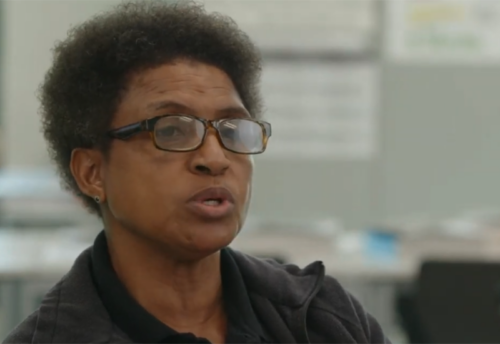
Importance of Collaborative Skills
This clip discusses what students need for collaboration, why collaboration is important, and how students can grow from working together with others.
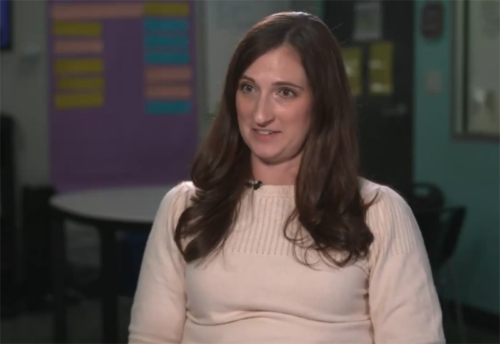
Productive Chaos, Learning, and Assessment
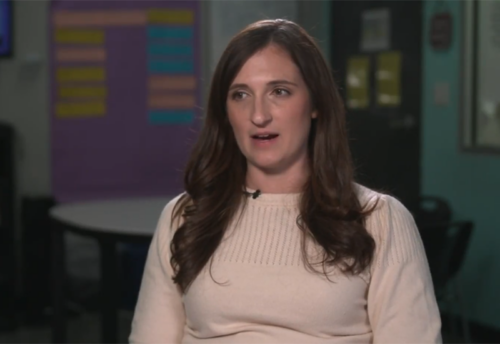
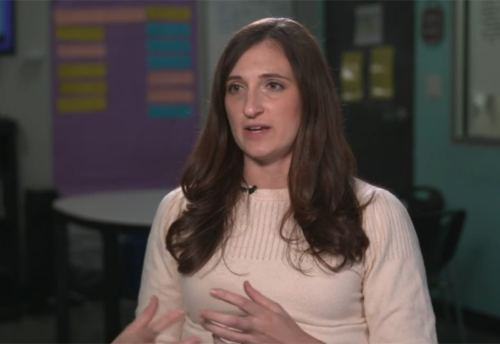
Sarah DiMaria discusses productive chaos, how it relates to learning, and tips for assessment.
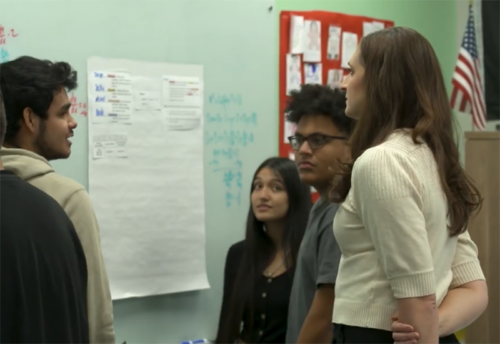
Assessing Collaborative Skills
When students are stuck or need help, the teacher asks them to explain their work first before allowing them to ask a specific question—not just if the answer is right or wrong.
Social Regulation of Learning
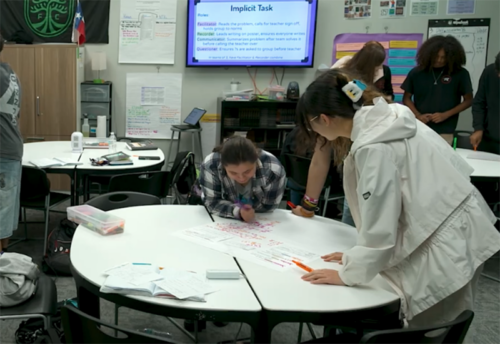
Students Working Through Issues
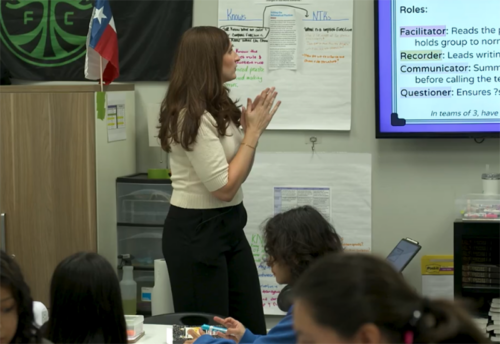
Sarah DiMaria is observing the students and stamping their page for effective use of materials.
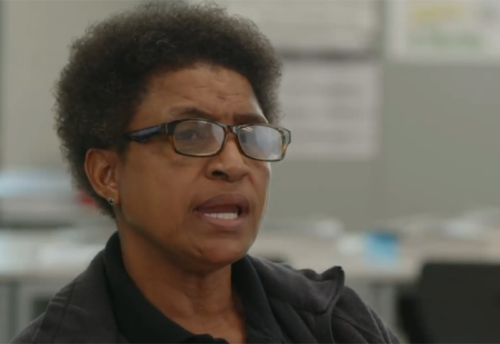
Facilitation to Support Collaborative Learning
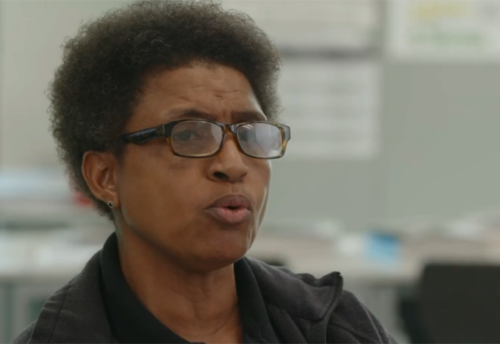
Related to facilitation, Beverly talks about living in the moment—not interrupting students when something good is happening and allowing them to work together through the process.
Student Perspectives
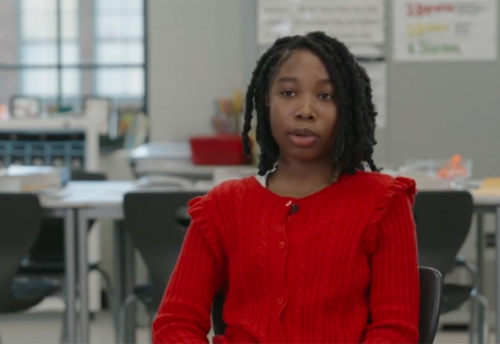
Middle School Students Share Perspectives on Collaborative Learning
Students discuss when they like collaborating, why it’s important, what helps, and challenges.
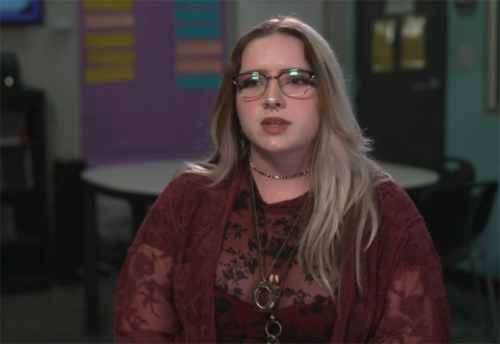
Student Perspectives on Collaborative Learning
Four students share their experiences with collaborative learning in their calculus class. They have been working in the class together for about three months. They share what collaboration brings to their learning, their lives, and also about challenges they have experienced.
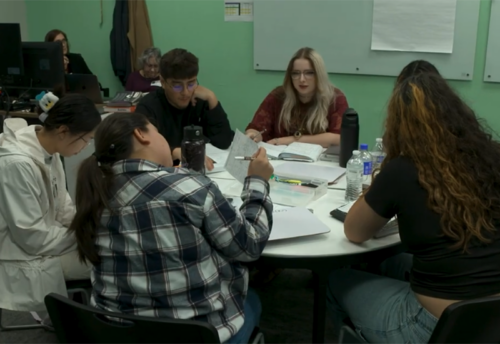
Group Work: Working Together
Students discuss working together to address things they do not understand.
Collaborative Learning in Action
Watch 20 minutes of Sarah DiMaria’s class working together during a collaborative assessment to see a warm-up, students connecting, how DiMaria sets up the task and the group roles. See also the associated worksheet.